
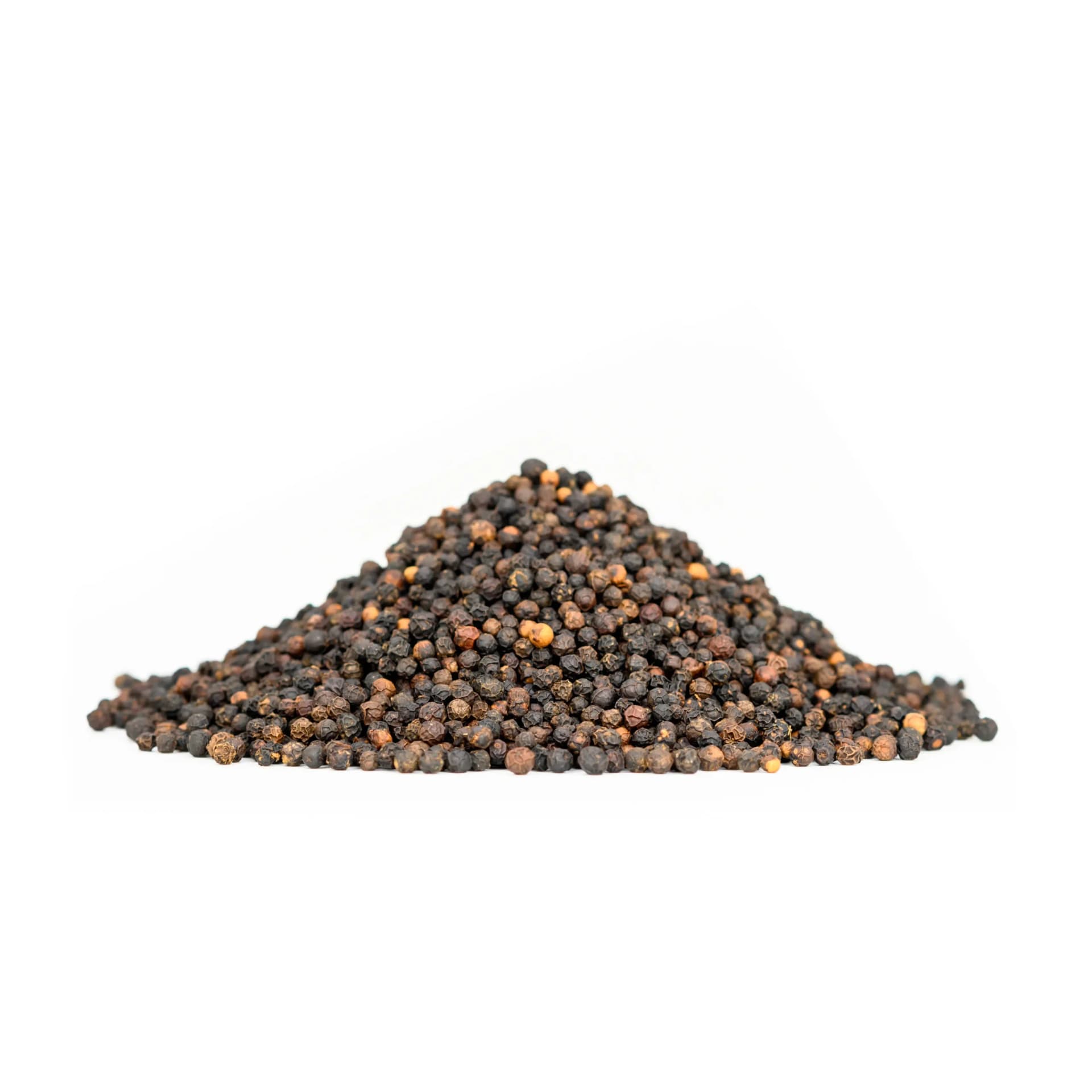
Black Pepper from Madagascar: Aromatic Strength and Best Culinary Uses
Madagascar black pepper does more than add heat: it carries woody, slightly fruity notes that fine kitchens have sought out for decades. Grown mainly on the east coast, between tropical heat and regular rainfall, it’s one of those spices that turns a decent dish into a memorable one.
A pepper shaped by the Malagasy climate
The pepper vine (Piper nigrum) climbs natural stakes on often family-run plots, in the partial shade of tall trees. The berries are hand-picked as they start to redden, then sun-dried on racks, which blackens the skin and concentrates the essential oils responsible for its aroma. This traditional drying, slower than industrial drying, is what gives Malagasy pepper its reputation: less aggressive than some Asian peppers, rounder, with a heat that builds gradually rather than hitting all at once.
Whole grain or ground: which to choose?
Whole black peppercorns keep their aroma intact far longer: the essential oil that carries the fragrance evaporates as soon as the berry is cracked. A table mill and a few seconds before serving are enough to transform a simple dish. Ground black pepper, on the other hand, is built for cooking: marinades, simmered sauces, spiced bread doughs — anything that needs even distribution without grinding at the last minute.
How to use it in the kitchen
- Red meats and game: a coarsely crushed pepper crust before searing over high heat.
- Sauces and reductions: a few whole berries infused then removed, for flavour without the bits.
- Spiced pastry: a touch of ground black pepper wakes up gingerbread or a red fruit compote.
- Winning pairing: black pepper contains piperine, which boosts the absorption of curcumin from turmeric — a duo that’s as culinary as it is wellness-driven.
How to store it
Kept away from light and humidity, in an airtight container, whole peppercorns last several years without losing intensity. Once ground, however, it loses much of its fragrance within a few months: better to grind small amounts regularly than to buy a large jar of powder.
A spice at the heart of trade history
Pepper was once so precious it was nicknamed the “black gold” of trade routes, exchanged for its weight in silver in medieval Europe. Madagascar entered this story later, but established itself thanks to a climate particularly favourable to the pepper vine and a drying know-how that has remained artisanal where other producing regions have largely industrialised the process. It’s this deliberate slowness that explains the aromatic roundness chefs look for.
Recognising quality pepper
A good black peppercorn should feel firm between the fingers, with no hollow or dusty patches, and release a clean scent as soon as it’s lightly crushed. Pepper that’s too light or dull often signals poorly controlled drying or storage that ran too long before packaging — simple criteria to check even without particular expertise.
Discover all our Madagascar peppers and spices in our Spices collection, sourced directly from partner producers on the east coast.